
Learning to Float
How Movement, Breath and Self-Compassion Restore Us

The force of the Colorado winds knocked over my green waste can. I bent down to lift the oversized container, and somehow my yoga-trained body rebelled.
Ouch, protested my usually reliable back. I knew I was in trouble.
A few days later in the Rocky Mountains, I slipped into a 102-degree hot spring, hoping the mineral water would soothe the physical ache.
The Roja pool welcomed me into its warmth. A waterfall poured from above, and I positioned by head and shoulders beneath it, letting the steady rush pound against muscle and bone. Tension began to loosen its grip.
As my body softened, my mind wandered, and uncovered aches of another kind. While soaking, I took inventory of the worries I’d been carrying, examining them one by one.
To my surprise, the irregular cadence of the falling water seemed to mirror the weight of each concern.
· I felt tiny droplets mist my eyes when I mulled over my book proposal. Steam circled my head like a halo. I gave my head a gentle shake, and as the mist cleared, so did the heaviness.
· When my mind turned to my presentation at an upcoming conference, the mist became beads of water rolling down my cheeks. I took three slow breaths, letting each exhale stretch much longer than the inhale. With every breath, I felt my body release the pressure of performance.
· Then came the harsh expectation I place on myself: that I be exceptional with every project I take on. I saw how that belief steals the foundation of “good enough.” The droplets turned into playful splashes, as if knocking sense into me. I welcomed them with an affirmation: “I don’t have to prove my value. I am enough.”
· Finally, my thoughts rested on the responsibility I carry as I walk with my loved one through their illness. The waterfall intensified, a deluge of water pelting my shoulders, massaging and undoing every knot, liberating my anguish and fatigue.
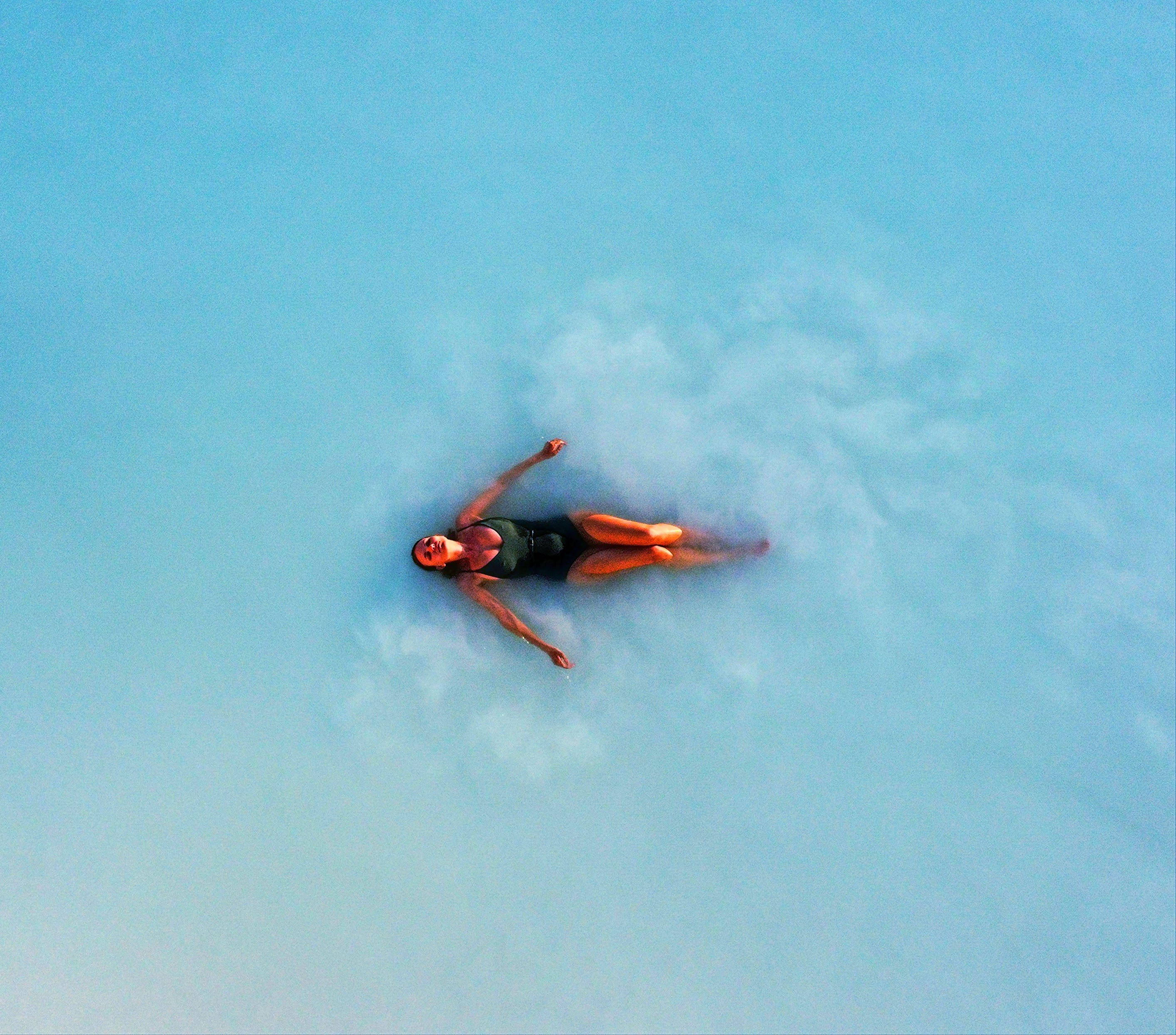
Feeling weightless now, I floated on my back, arms and legs extending into the form of a water angel. Above me stretched a turquoise sky.
At first, I expanded my lungs to stay afloat. But when I freed my breath, I noticed something unexpected—the water held me anyway, reminding me I could let go.
In the golden stillness, nature took a turn and supported me. I yielded my worries, trusting in my ability to find my way forward.
~~~~~~~~~~~~~~~~~~~~~~~~~~~~~~~~~~~~~~~~~~~~~~~~~~~~~~~~~~~~~~~
I wish each of you had a hot mineral spring nearby to soak away your concerns! But even if you don’t, your body offers its own healing tools.
Movement: a gentle shake of the head or limbs lowers stress hormones like cortisol and adrenaline. Rhythmic movement releases “feel good” chemicals like serotonin and dopamine, creating a sense of well-being. Moving meditation can include activities like yoga or tai chi.
Slow breathing, especially when the exhale is longer than the inhale, stimulates the vagus nerve, lowers your heart rate and blood pressure, and interrupts rumination. The body begins to register safety. Try inhaling to the count of four, then exhaling to the count of 8, repeating four times. Notice your body release tension.
Affirmations engage your prefrontal cortex and soften perceived threat. When we speak to ourselves with grounded kindness, we reduce the harshness of negative self-talk and cultivate self-compassion. To create an affirmation, identify the pain point or fear (e.g. “I’m not doing enough”) and flip the belief so that it creates a positive I-statement, such as “I am doing the best I can.” You can pair the belief with a hand on the chest or simply make eye contact with yourself in the mirror.
When we face problematic situations, bear in mind that we don’t have to hold ourselves up so tightly. We can take a moment and let ourselves be held.
Reflection: What would happen if you let yourself float instead of bracing this week?
Invitation to You: Thank you for being a dedicated reader. If this essay felt meaningful to you, sharing it helps support my writing and extends the conversation.
This was a great read. I'm always surprised at how often I forget that breathing quells my anxiety.
An expression I use is "Flip and float" when I'm trying to fight something when I should just be accepting.
Slow breathing gets me through most days 🧘♀️